Episode 3 “A Boat Turns Slowly”
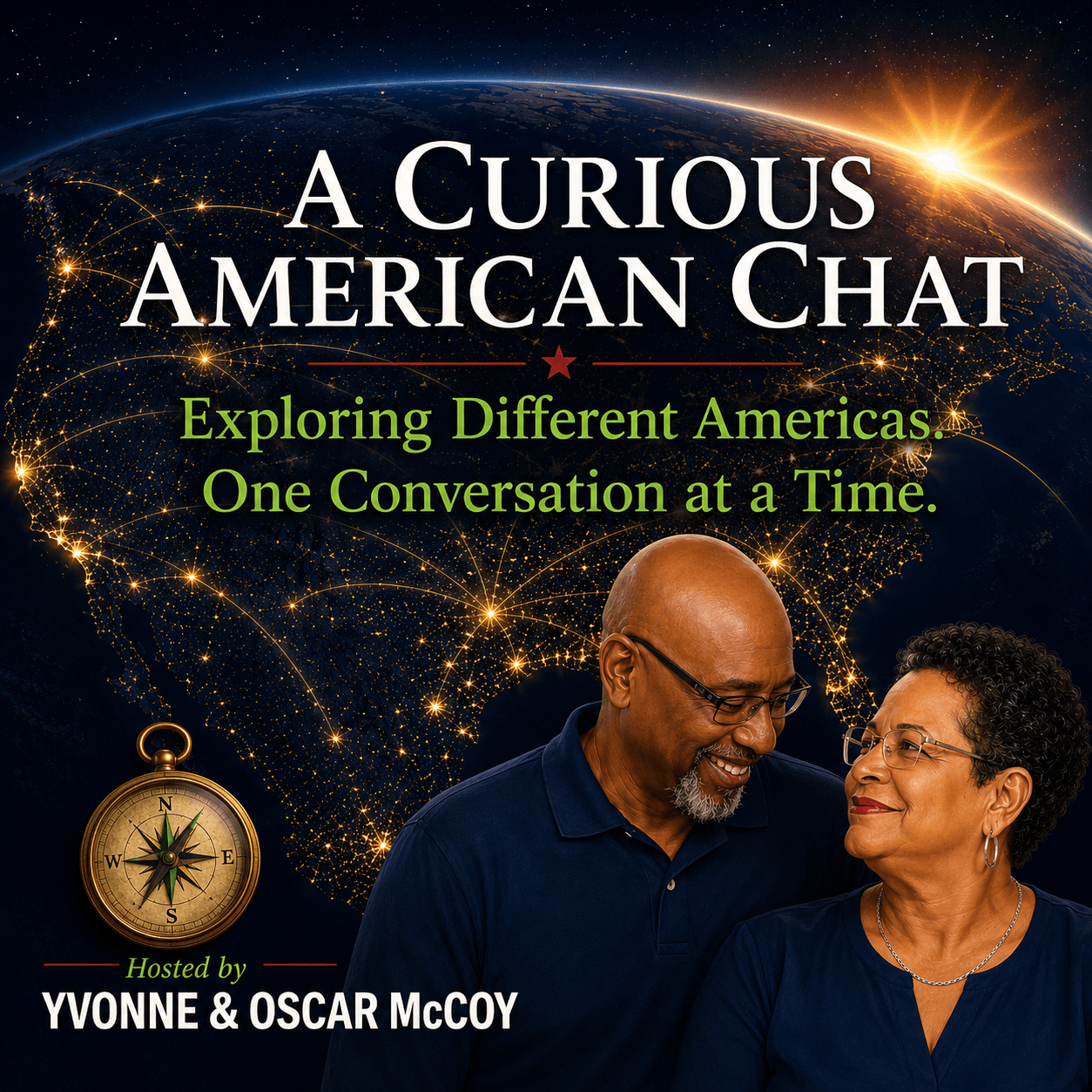
Why We Are Starting This Conversation
As America approaches its 250th birthday, I’ve found myself asking a simple question:
How did we get here?
Not just politically, but culturally, socially, economically, and personally.
To understand where we are, we have to understand how we got here.
And that requires curiosity. Not criticism. Not assumptions. Curiosity.
Because one thing I’ve learned is that people can live through the exact same moment in history and have completely different experiences. Same country.
Different moment in history. Different stories. Different perspectives. Different Americas.
Participation Matters
One of the greatest privileges we have is the ability to participate.
To learn.
To engage.
To vote.
To help shape what comes next.
It's a choice.
What was your family doing? What affects one, affects us all!
EPISODE 3
Last episode, we talked about the promise. This time, we ask what happened to it.
Two things can be true at once:
the Constitution was one of the most radical documents of its time — AND it protected slavery in three separate clauses, on purpose, in the text. Both things are true. And the gap between them didn't close overnight — because a boat doesn't turn on a dime.
You spin the wheel, and for a long stretch, it just keeps going exactly where it was already headed.
In this episode we talk about the laws written into the founding itself, who got left out of "all men are created equal" — including Native Americans, written out of citizenship from day one — and two names you should know:
Wentworth Cheswell, elected to public office in 1768, eight years before the Declaration was even signed, and
Elizabeth Freeman, an enslaved woman who heard the words "all men are born free and equal" read aloud in a town square — and sued for her freedom the next day.
Oh — and that famous ride everyone associates with Paul Revere? A Black man made a ride that same night, carrying the same urgent news. History just kept one of their names.
Resources
🎬 Watch
• The American Revolution (2025), PBS — Episode 6, “Elizabeth Freeman Successfully Sues for Her Freedom.” A polished, accurate short segment on her 1781 case. Streaming on PBS.
• Basic Black — “Elizabeth 'Mum Bett' Freeman” (2021 episode), PBS. A historian panel with more depth on her legacy.
• “Meet Elizabeth Freeman” — a short first-person theatrical performance from the Museum of the American Revolution, with a behind-the-scenes companion video.
📚 Read
• Death or Liberty: African Americans and Revolutionary America by Douglas R. Egerton — covers 1763–1800; argues the Founders had a real shot at gradual emancipation and chose not to take it.
• Mother of Freedom: Mum Bett and the Roots of Abolition by Ben Z. Rose — full biography of Elizabeth Freeman.
• Roots by Alex Haley (book or miniseries) — for pre-colonial African context.
💻 YouTube — quick and free
• Search “Wentworth Cheswell Black Paul Revere” — short explainers on his life and Revolutionary War role.
• Search “3/5 Compromise explained” and “Naturalization Act 1790 explained.”
🔍 One Contributor Moment — “They Excelled In Spite Of”
Wentworth Cheswell — elected town constable in 1768, eight years before the Declaration of Independence was even signed. He rode as a Revolutionary War messenger the same night as Paul Revere, fought at the Battle of Saratoga, and held public office in New Hampshire almost every year for nearly fifty years — the first Black American elected to office in U.S. history.