EPISODE 4 \"Uncredited
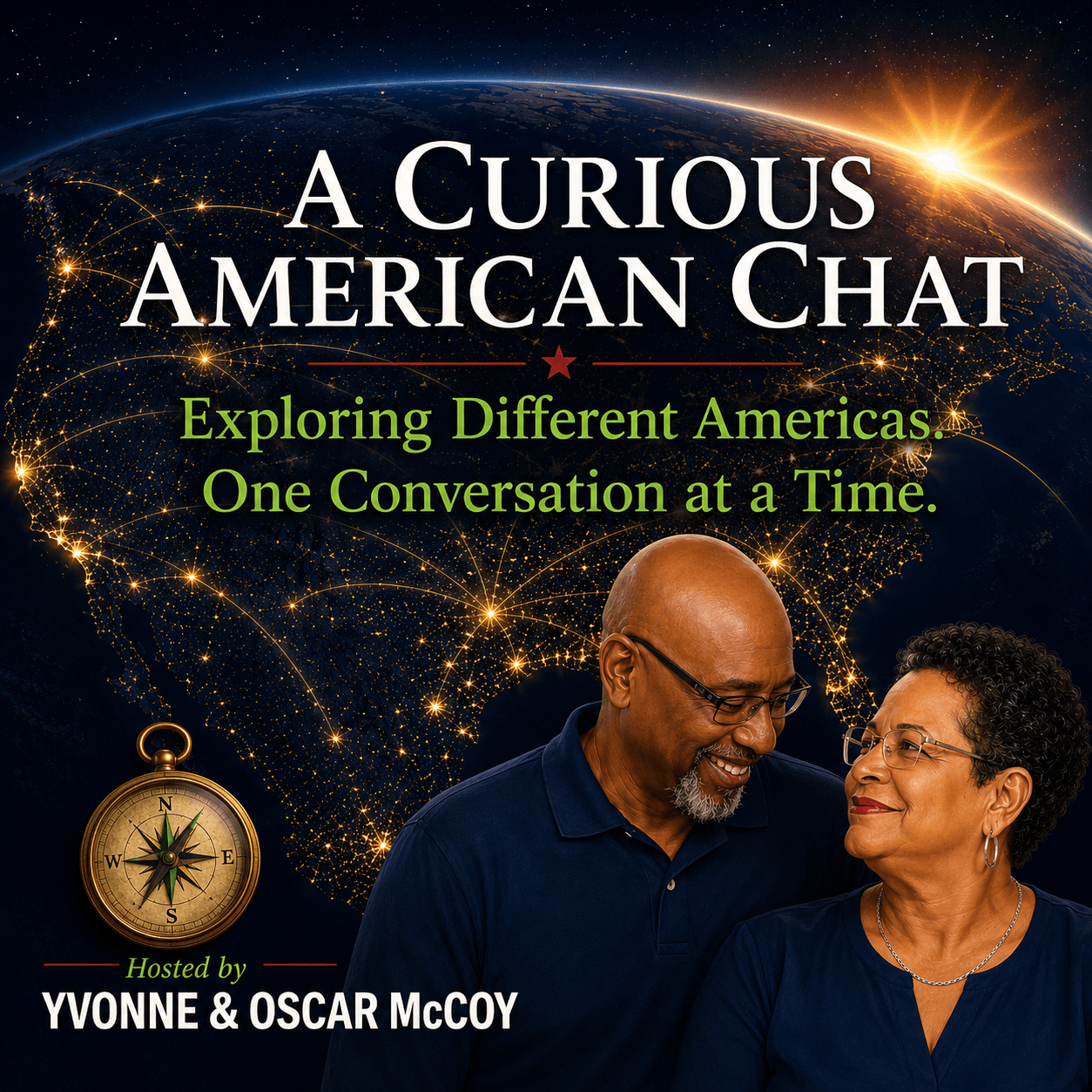
Why We Are Starting This Conversation
As America approaches its 250th birthday, I’ve found myself asking a simple question:
How did we get here?
Not just politically, but culturally, socially, economically, and personally.
To understand where we are, we have to understand how we got here.
And that requires curiosity. Not criticism. Not assumptions. Curiosity.
Because one thing I’ve learned is that people can live through the exact same moment in history and have completely different experiences. Same country.
Different moment in history. Different stories. Different perspectives. Different Americas.
Participation Matters
One of the greatest privileges we have is the ability to participate.
To learn.
To engage.
To vote.
To help shape what comes next.
It's a choice.
What was your family doing? What affects one, affects us all!
EPISODE 4 — "Uncredited"
Last time, we talked about a boat that turns slowly. This time, we ask: while it was barely turning, what was the government actually doing?
Two things can be true at once: this era produced some of the most important Black inventors in American history — AND the law was often rigged so they could never legally own what they built. Both things are true.
And the government wasn't standing still while it happened — it was actively redrawing the lines on who counted.
In this episode we talk about the Missouri Compromise and the Indian Removal Act — the same government, the same years, denying Native nations their land while expanding slavery's map — the Fugitive Slave Act of 1850, and the Supreme Court's 1857 ruling that no Black person could ever be an American citizen.
Then we ask a simpler question: if you can't legally own your own mind's work, is that just a technicality — or its own kind of bondage? Names you should know:
Thomas L. Jennings, a free Black tailor who became the first African American to hold a U.S. patent in 1821 — and used the money to buy his family's freedom,
Henry Blair, the second Black patent holder, listed on his own application as "a colored man,"
Norbert Rillieux, whose sugar-refining invention is still used in industries today, and
Paul Cuffe, back from Episode 3 — by the 1810s, one of the wealthiest Black shipowners in the country.
Oh — and at almost the exact same time, in France, a man born enslaved in Haiti became a general commanding over 50,000 troops. Same era. Different country. Different rules.
Resources
🎬 Watch
12 Years a Slave (2013) — based on Solomon Northup's real memoir, a free Black man in New York kidnapped and sold into slavery in the early 1840s. Sits almost exactly inside this episode's window and captures the free-vs-enslaved distinction the whole episode turns on.
Amistad (1997) — the 1839 revolt aboard a slave ship and the legal battle that followed, argued up to the Supreme Court. Good pairing with the Dred Scott beat, since both hinge on courts deciding who counts as a person under the law.
📚 Read
💻 YouTube — quick and free
•• Search “Henry Blair second Black patent holder.”
• Search “Paul Cuffe Sierra Leone voyage 1811.”
• Search “Dred Scott v. Sandford explained” and “Indian Removal Act explained.”
🔍 One Contributor Moment — “They Excelled In Spite Of”
Henry Blair — second Black American notably listed as “a colored man” on his own application.to hold a U.S. patent (1834), for a seed planter and later a cotton planter,