EPISODE 8 - Too Independent
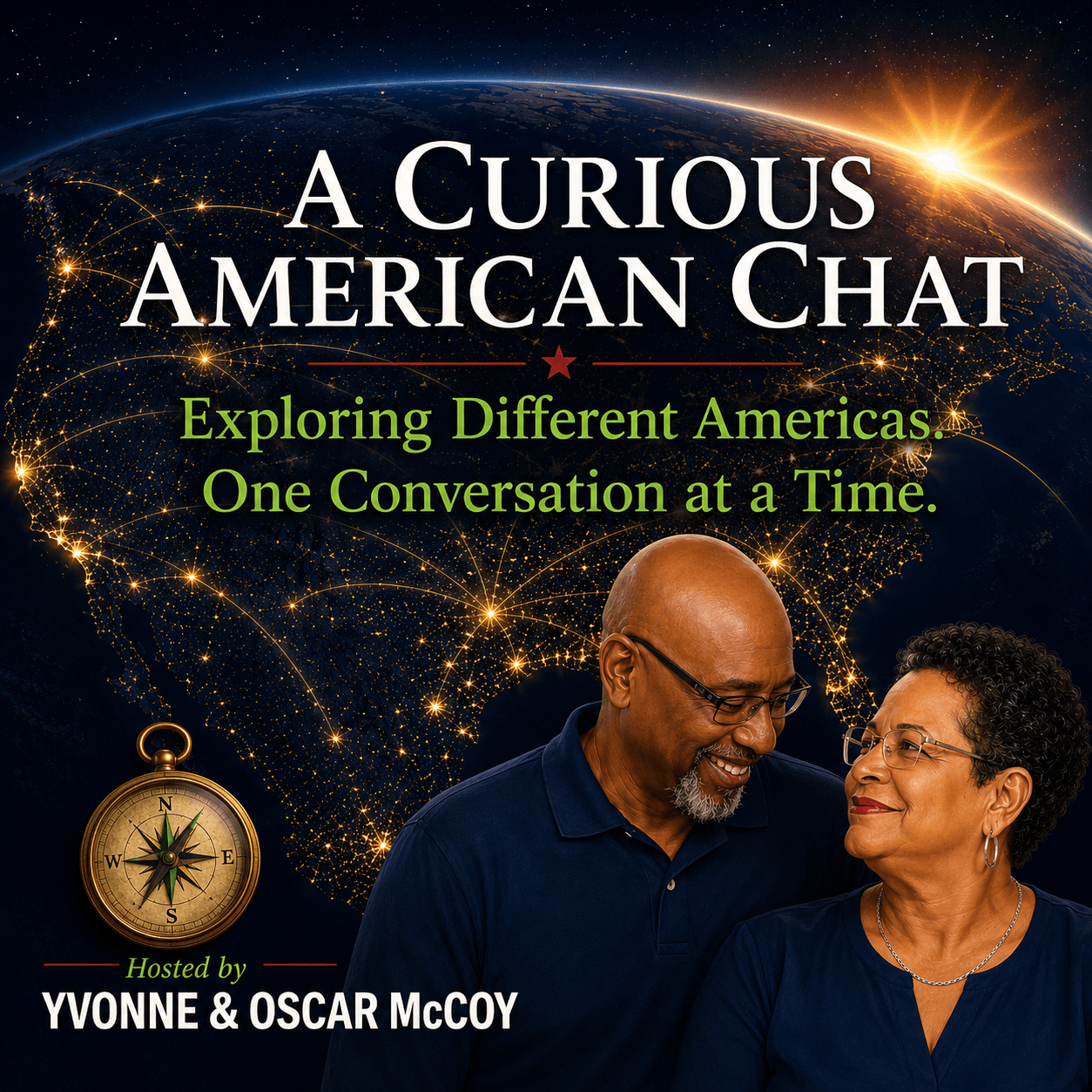
Why We Are Starting This Conversation
As America approaches its 250th birthday, I’ve found myself asking a simple question:
How did we get here?
Not just politically, but culturally, socially, economically, and personally.
To understand where we are, we have to understand how we got here.
And that requires curiosity. Not criticism. Not assumptions. Curiosity.
Because one thing I’ve learned is that people can live through the exact same moment in history and have completely different experiences. Same country.
Different moment in history. Different stories. Different perspectives. Different Americas.
Participation Matters
One of the greatest privileges we have is the ability to participate.
To learn.
To engage.
To vote.
To help shape what comes next.
It's a choice.
EPISODE 8 — "Too Independent"
What happens when a community succeeds so well that its own success becomes the threat?
Two things can be true at once: Black Americans built self-sustaining economies — banks, hospitals, colleges — entirely from necessity, because the law barred them from every white institution — AND that same independence made them a target.
Both things are true. In 1921, a white mob burned Tulsa's “Black Wall Street” to the ground in under 24 hours, killing as many as 300 people — for the crime of succeeding too visibly. The same decade, the federal government pursued Marcus Garvey, builder of the largest Black organization in American history, until he was deported.
In this episode we talk about the nationwide pattern of Black-built institutions, the real difference between immigrant enclaves and Black exclusion, and the woman who had to leave the country to become who she was:
• Bessie Coleman, who couldn't find a single American flight school willing to train a Black woman — so she learned French, moved to France, and became the first Black woman in the world to earn a pilot's license, and
• Maggie Lena Walker, the first woman of any race in America to charter and run her own bank.
Oh — Bessie Coleman had to leave the country just to learn to fly. Decades later, the earliest instructors for the Tuskegee Airmen learned some of their training methods the same way — a debt this country's aviation history owes to a place that simply said yes when America said no.
Resources
🎬 Watch
• Watchmen (2019, HBO) — its opening sequence dramatizes the Tulsa Race Massacre; flag: it's a fictional superhero series, use only the opening as a visual reference, not as history.
• Search “Bessie Coleman first Black woman pilot documentary” for short profile videos.
• Search “Marcus Garvey UNIA documentary” for archival footage and profile pieces.
📚 Read
• Death in a Promised Land: The Tulsa Race Riot of 1921 by Scott Ellsworth — the foundational academic account.
• Search “Bessie Coleman Queen Bess” for accessible biography options.
• Search “Maggie Lena Walker St. Luke Penny Savings Bank” for her full story.
💻 YouTube — quick and free
• Search “Tulsa Race Massacre explained” and “Black Wall Street history.”
• Search “Harlem Renaissance explained” and “Marcus Garvey UNIA explained.”
🔍 One Contributor Moment — “They Excelled In Spite Of”
Mary McLeod Bethune — founded her school in 1904 with $1.50 and five students; by the 1920s and 1930s it had grown into a national movement, and she became an advisor to President Franklin Roosevelt.
What was your family doing? What affects one, affects us all!