EPISODE 13 - The Ones Who Weren't Photographed
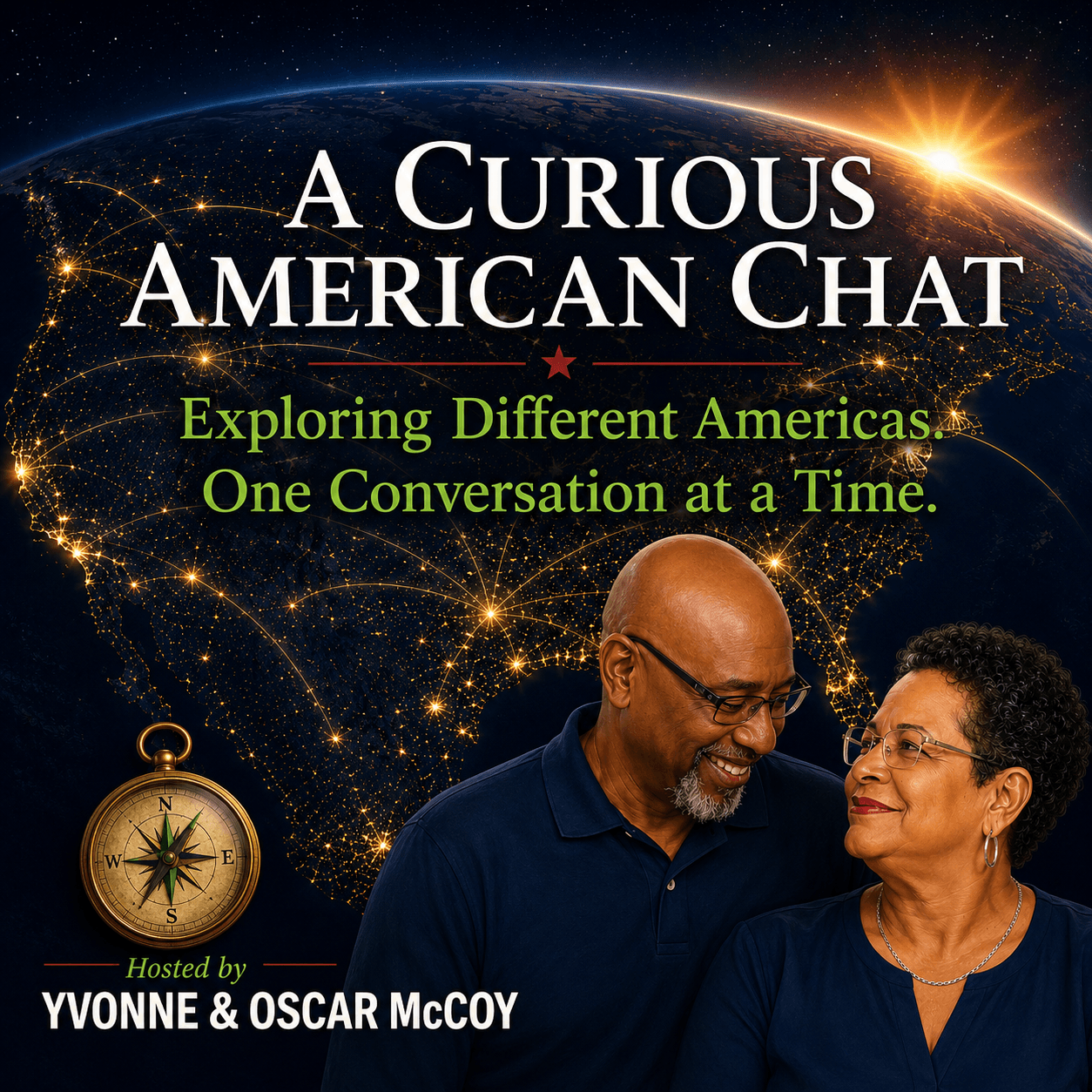
Why We Are Starting This Conversation
As America approached its 250th birthday, we found myself asking a simple question:
How did we get here?
Not just politically, but culturally, socially, economically, and personally.
To understand where we are, we have to understand how we got here.
And that requires curiosity. Not criticism. Not assumptions. Curiosity.
Because one thing I’ve learned is that people can live through the exact same moment in history and have completely different experiences. Same country.
Different moment in history. Different stories. Different perspectives. Different Americas.
Participation Matters
One of the greatest privileges we have is the ability to participate.
To learn.
To engage.
To vote.
To help shape what comes next.
It's a choice.
Edition 13
The Ones Who Weren't Photographed
You've probably seen the poster of Rosie the Riveter. Who wasn't in that picture?
Yvonne's mother worked as a welder during World War II, the same job the famous poster made a national symbol. But the woman on that poster wasn't meant to represent her.
Black women did the same wartime industrial labor, often in the hardest and most dangerous jobs, and were almost entirely left out of the image the country built to celebrate it. The work was identical. The recognition wasn't.
It wasn't only the factories. The Army Nurse Corps was segregated, and Black nurses were largely limited to treating Black soldiers. In some places, Black nurses were assigned to care for German prisoners of war.
Dr. Charles Drew developed methods for storing and shipping blood plasma that helped save Allied lives. In 1941 the military barred Black Americans from donating blood at all. When the policy was revised, it allowed Black donations but kept the blood segregated by race.
Drew publicly condemned the policy as unscientific, and he resigned from the Red Cross in 1942.
Then there is the Six Triple Eight, the 6888th Central Postal Directory Battalion, the only all-Black, all-female unit to serve overseas during the war. In 1945, 855 women were sent to England to clear a mail backlog that was supposed to take six months. They finished in three.
They worked around the clock in unheated buildings, in three shifts, seven days a week, as a segregated unit. Their motto was "No mail, low morale," because every letter was somebody's connection to home. They were led by Major Charity Adams.
A monument to the battalion wasn't dedicated until November 30, 2018, at Fort Leavenworth. President Biden signed the Congressional Gold Medal for them on March 14, 2022, seventy-seven years after the mission.
It wasn't all hardship. By 1943, over 180 USO operations had been set aside for African American servicemen. The George Washington Carver USO in Spokane opened in 1943 and drew over 85,000 visits in 1947 alone.
A national survey during the war found that 44 percent of Black troops called the USO "absolutely essential" to them. People built real joy for themselves, even inside a segregated system.
What we're asking ourselves this week: Whose wartime labor in your own family never made it into a photograph?
Talk to someone in your family this week. You might be surprised what you learn.
We didn't have to dig deep to find these stories. History repeats itself, which is why it matters to know it, and why it matters to vote.
Resources
🎬 Watch: The Six Triple Eight (2024, Netflix), a dramatized feature directed by Tyler Perry, so good for the broad strokes, not the exact facts. Search "Black Rosie the Riveter documentary."
📚 Read: Search "6888th Central Postal Directory Battalion Congressional Gold Medal." Search "Black Army nurses WWII German prisoners of war." Search "Charles Drew Red Cross blood bank resignation."
💻 Search: "Six Triple Eight Charity Adams." "George Washington Carver USO club Spokane." "Black women WWII factory workers."